As an Amazon Associate, this site earns from qualifying purchases.
| Home theater in a box pick | Best for | Why |
|---|---|---|
| Yamaha YHT-4950U | A first receiver-based surround room | A receiver, five speakers and a subwoofer give a newcomer a complete 5.1 layout to plan around. |
| Yamaha YHT-5960U | A shared movie and music room | This Yamaha package pairs surround equipment with MusicCast and HDMI support for compatible 8K sources. |
| Yamaha YHT-4970U | A console sharing the receiver | The package combines a powered sub and five speakers with an eARC receiver that lists 4K/120 support. |
A home theater in a box makes the most sense when the included speakers, amplifier and connections all fit the same room. Start by deciding whether the package has to switch HDMI sources or only play sound.
Yamaha YHT-4950U
A receiver, five speakers and a subwoofer give a newcomer a complete 5.1 layout to plan around. The front center belongs by the TV while the surround pair sits near the audience.
Bluetooth adds an easy music source without requiring a second set of speakers.
Check before buying. Allow room for the receiver and routes for the surround leads.
Yamaha YHT-5960U
This Yamaha package pairs surround equipment with MusicCast and HDMI support for compatible 8K sources. It suits someone who wants the receiver to handle music between movie nights.
Inventory the HDMI sources and decide which will connect to the TV directly before choosing the center of the system.
Check before buying. MusicCast adds little for someone who streams everything through the TV.
Yamaha YHT-4970U
The package combines a powered sub and five speakers with an eARC receiver that lists 4K/120 support. A compatible console can share the system with movie sources.
Count the speakers supplied when planning placement and distinguish receiver decoding from the actual positions in your room.
Check before buying. The five included speakers do not add a separate overhead pair.
Logitech Z906
The Z906 combines five satellite speakers with an amplified subwoofer and a separate control console. It makes sense when a desk and a small viewing area share the same sources.
Decide where the control unit will sit and check the source's audio output before budgeting for extra leads.
Check before buying. It does not replace an HDMI video switch.
Rockville HTS56
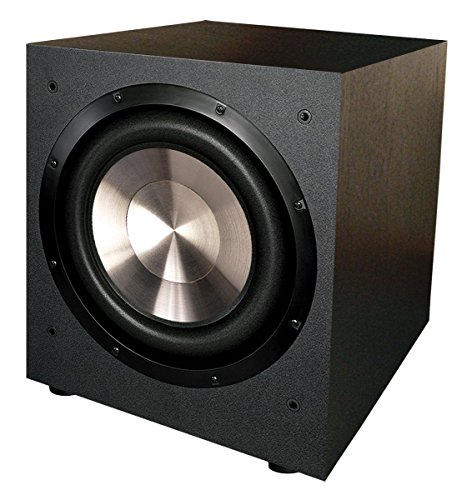
This 5.1 package puts an eight-inch subwoofer and matching speakers in one purchase. Bluetooth is useful for music when the TV is off.
Trace the proposed signal path from the television to the speaker package and verify that it supports the channel layout you intend to use.
Check before buying. Bluetooth playback alone does not establish discrete surround from a TV.
How these were chosen
The shortlist uses published specifications and owner feedback as buying inputs. Receiver bundles and amplified speaker packages serve different sources, so the comparison starts with the input path.
Cabinet count, cable routes and space for the controls matter more here than a peak power number printed across the carton.
What to look for
Decide where video goes
Draw one line for each console, cable box and disc player. A receiver can sit between a source and the screen if it passes your required video format.
With an amplified speaker package, you may instead need to switch video at the television and send audio out separately. Look up the TV's supported output formats before assuming five individual channels will reach the speakers.
Place all five before buying any
Put paper squares where the left, center, right and two surround speakers would live. Now open the doors, walk around the couch and look for a path back to the equipment shelf.
A box that includes every channel still leaves you responsible for finding a workable home for each one.
Home theater in a box
Follow one movie from player to couch
Suppose a disc player, cable box and TV app all share a room. On a receiver system, the disc player and box can feed compatible receiver inputs.
The receiver sends picture to the TV, and a supported return connection brings app sound back. Now draw the same room with a speaker-only package.
The TV may need to switch both external sources and send audio out in a format the package understands. That second drawing often reveals a missing connection before you commit to the box.
Count the things the bundle cannot choose
The carton can supply a matching set of speakers, but it cannot determine the length of the route behind your couch. Measure around the edge of the room and up to each final speaker position.
Record the left and right surround routes separately. A doorway on one side can double the useful length even when the two speakers sit equally far from the listening position.
Check the supplied leads and connector style before buying extensions.
A layout for roommates
Imagine one person using the TV app daily and another bringing a console out on Friday. Leave the everyday sound path fixed, label the console input and keep its cable accessible.
The receiver should return to normal TV sound without someone crawling behind the shelf. If the package uses a separate control console, put it where either viewer can see the selected input from the couch.
That simple arrangement may matter more to them than another listening preset.
Understand the first setup screen
On a receiver bundle, follow the supplied setup routine and identify which speaker sounds when each channel is named. A surround speaker that plays the center test signal tells you to check the connections before judging a movie.
After all positions match, use a familiar dialogue scene and then a sequence with movement behind the camera. A test tone establishes the channel route, while actual material tells you whether the level and placement are comfortable.
Look ahead to a furniture change
Someone moving into a larger room soon may value ordinary replaceable speaker leads and a receiver that can remain the center of the setup. Someone keeping a desk system in one place may prefer compact controls and a straightforward connection to a computer.
Check the instructions for the specific package before counting on interchangeable parts. Similar-looking plugs do not establish that two speaker systems use the same wiring or electrical requirements.
Look at the back panel in the product photos before choosing a package for a TV console. On a receiver, several similar HDMI sockets may serve different functions.
On a speaker package, connectors that look familiar can be audio inputs only. Keep that picture beside the list of sources and identify every required connection.
FAQ
Can any TV produce discrete surround?
Check the source, the program, the TV output and the speaker system input. The chain has to carry a supported multichannel signal.
Does a 5.1 box include ceiling speakers?
The five refer to ear-level channels and the .1 to a bass effects channel. Inspect the supplied speaker list for the physical layout.
Where does the center speaker go?
Start near the screen centerline with its face clear of the cabinet edge. Check that it leaves the picture visible.
Should an existing receiver owner buy a full package?
First list the missing speakers and inputs. A complete bundle may duplicate working equipment.
Bottom line
Choose a receiver bundle when several video sources must share one system. An amplified speaker package makes sense when a compatible source already handles switching.